

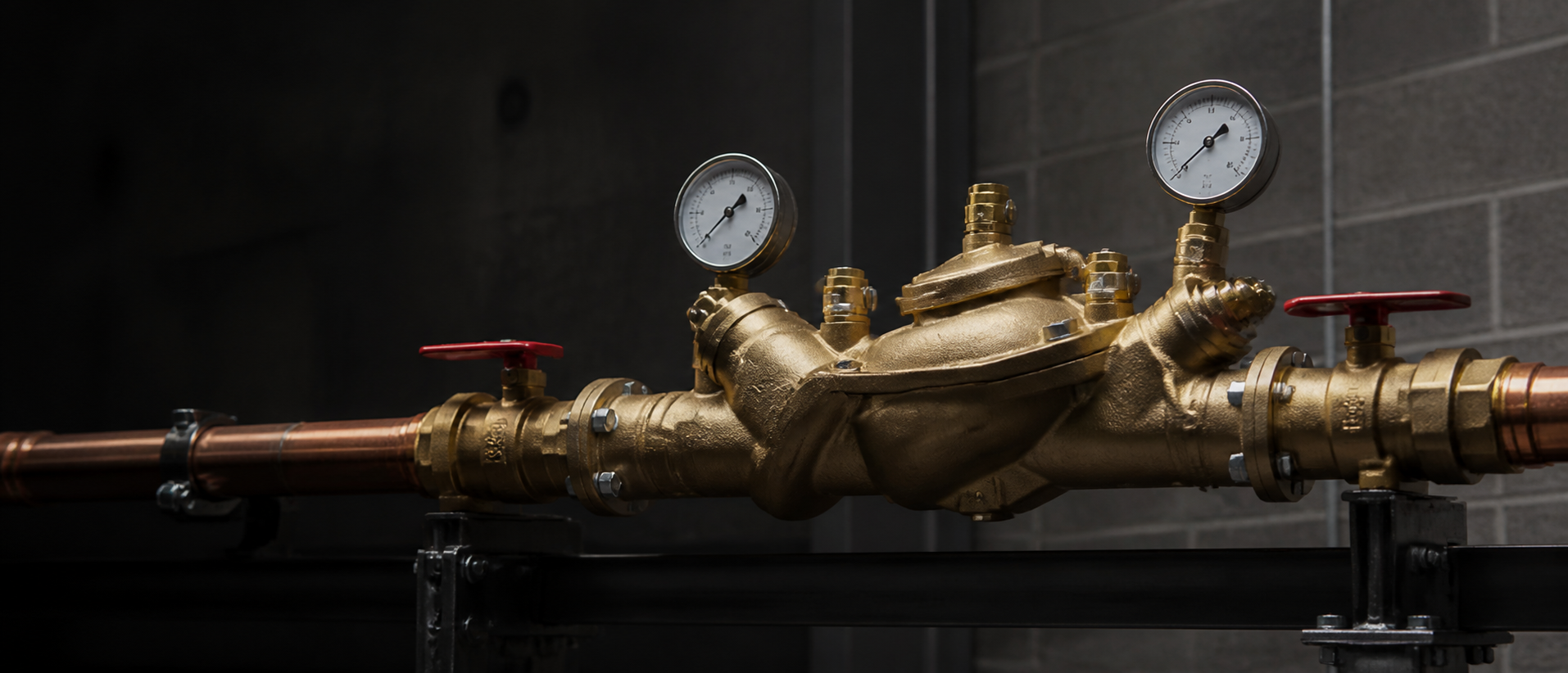
Backflow Prevention & RPZ Testing Requirements.
What is it?
Backflow prevention devices protect New York City’s drinking water by preventing contaminated water or chemicals from flowing backward from a property’s plumbing system into the public water supply.
Certain properties and businesses must install, maintain and test an approved backflow prevention device. An RPZ, or Reduced Pressure Zone assembly, is one commonly used type of device. For official requirements, visit the NYC Department of Environmental Protection Backflow Prevention page.
Backflow Prevention & RPZ FAQs
What is backflow?
Backflow occurs when a change in water pressure causes water to flow in the opposite direction. This can allow contaminated water, chemicals or other substances from a building’s plumbing system to enter the public drinking water supply.
A properly installed and maintained backflow prevention device helps stop this reverse flow.
What is an RPZ device?
An RPZ, or Reduced Pressure Zone assembly, is a type of backflow prevention device used to protect the drinking water supply from potentially hazardous contamination.
NYC DEP determines the appropriate type of backflow prevention protection based on the property and the degree of potential hazard. Some properties may require an RPZ, while others may require a Double Check Valve Assembly or another approved device.
Which properties may require a backflow prevention device?
NYC DEP requires backflow prevention devices at properties that present an actual or potential risk to the public water supply.
Properties that may require a device include those with:
In-ground irrigation systems
Swimming pools
Multiple water service lines
Commercial or public kitchens
Large or chemically treated boilers
Roof tanks or elevated water storage
Water-cooled equipment or chillers
Medical, dental or laboratory facilities
Laundries, dry cleaners or commercial car washes
Auto repair shops
Schools, nursing homes or food-processing facilities
This is not a complete list. View the NYC DEP list of properties that may require backflow prevention devices for additional information.
How can I determine whether my property requires one?
A Professional Engineer or Registered Architect can evaluate the property, its water services and its potential cross-connection hazards to determine whether a backflow prevention device is required.
If the property or business type is not listed by DEP, the owner may call 311 and request that the question be directed to NYC DEP.
Receiving a DEP order or notice means the property owner should address the requirement by the deadline stated in the notice.
What is the installation and approval process?
The general process for a new backflow prevention device is:
A Professional Engineer or Registered Architect evaluates the property and prepares the required backflow prevention plans.
The plans and application are submitted to NYC DEP for approval.
After DEP approves the plans, a New York City Licensed Master Plumber installs the approved device.
A New York State-certified backflow prevention device tester performs the initial test.
The test report is completed and signed by the required licensed professionals.
The completed initial test report is submitted to NYC DEP within 30 days of installation.
The Professional Engineer or Registered Architect can use the NYC DEP Application for Approval of Backflow Prevention Assemblies.
How often must the device be tested?
After installation and initial testing are completed, the backflow prevention device must be tested every 12 months by a New York State-certified backflow prevention device tester.
NYC DEP may mail the property owner a notice when the annual test is due. However, owners should maintain their own records and should not rely solely on receiving a reminder.
Failure to complete the required annual testing may result in enforcement, fines or disconnection of the property’s water service.
Who may perform the annual test?
The device must be tested by a New York State-certified backflow prevention device tester.
For an annual test, the test form must be completed by the certified tester and signed by a New York City Licensed Master Plumber. The completed report is then submitted to NYC DEP.
The NYC DEP Backflow Prevention Test and Maintenance Form is used for both initial and annual testing.
Is the initial test different from an annual test?
Yes. The initial test is performed after a newly approved device has been installed.
The initial test report must be completed by a New York State-certified tester and signed by the Licensed Master Plumber and the Professional Engineer or Registered Architect associated with the approved plans. The completed report must be submitted to NYC DEP within 30 days of installation.
Subsequent annual test reports are completed by the certified tester and signed by a Licensed Master Plumber.
What happens if the device fails?
If the device does not pass its test, it may need to be repaired, rebuilt or replaced. The device must then be retested to confirm that it is operating properly.
The necessary work will depend on the condition of the device, the reason it failed and whether the existing installation complies with the approved plans and current requirements.
What if DEP has no record of my existing device?
If a device is already installed but NYC DEP has no record of it, DEP may require a Professional Engineer or Registered Architect to submit a record drawing of the installation together with an initial test report for review.
Having an installed device does not necessarily mean that its plans, installation and initial testing were properly filed with DEP.
What information should I provide when scheduling service?
When requesting installation, annual testing or repair service, provide the following information when available:
Property address
NYC DEP notice or order
Device manufacturer, model, size and serial number
Location of the device within the property
Previous backflow test report
DEP approval or application number
Annual testing deadline
Information about any known leak, discharge or failed test
Need help with Backflow Prevention or RPZ Testing?
Master Plumbing & Heating can assist with backflow prevention and RPZ installation, annual testing, certification, repairs and replacement.
Contact us with the property address, a copy of any NYC DEP notice and information about the existing device, if available, to schedule service or discuss the property’s requirements.